
- posted: Jan. 14, 2026
Foot pain can interfere with nearly every aspect of daily life—from walking and working to exercising and sleeping. When conservative treatments such as rest, stretching, orthotics, or anti-inflammatory medications do not provide enough relief, cortisone injections may be recommended as an effective next step.
Cortisone injections are commonly used in podiatry to reduce inflammation and relieve pain caused by a variety of foot and ankle conditions. Understanding how these injections work, what the procedure involves, and how long relief typically lasts can help you decide whether this treatment is right for you.
What Is a Cortisone Injection?
A cortisone injection contains a corticosteroid medication, often combined with a local anesthetic. Corticosteroids are powerful anti-inflammatory agents that reduce swelling, irritation, and pain at the source.
Unlike oral medications that affect the entire body, cortisone injections are delivered directly into the area of inflammation, providing targeted relief with minimal systemic effects.
Common Foot and Ankle Conditions Treated with Cortisone Injections
Cortisone injections are frequently used to treat inflammatory conditions, including:
Plantar fasciitis
Heel pain and heel spurs
Tendonitis (Achilles, posterior tibial, peroneal)
Arthritis in the foot or ankle joints
Capsulitis
Bursitis
Nerve irritation
Your podiatrist will determine whether inflammation is the primary cause of your pain before recommending an injection.
When Are Cortisone Injections Recommended?
Cortisone injections are typically considered when:
Pain has persisted for weeks or months
Conservative treatments have failed
Inflammation is limiting mobility or daily activities
Surgery is not indicated or should be delayed
They are often used as part of a comprehensive treatment plan, not as a standalone solution.
What Happens During a Cortisone Injection Appointment?
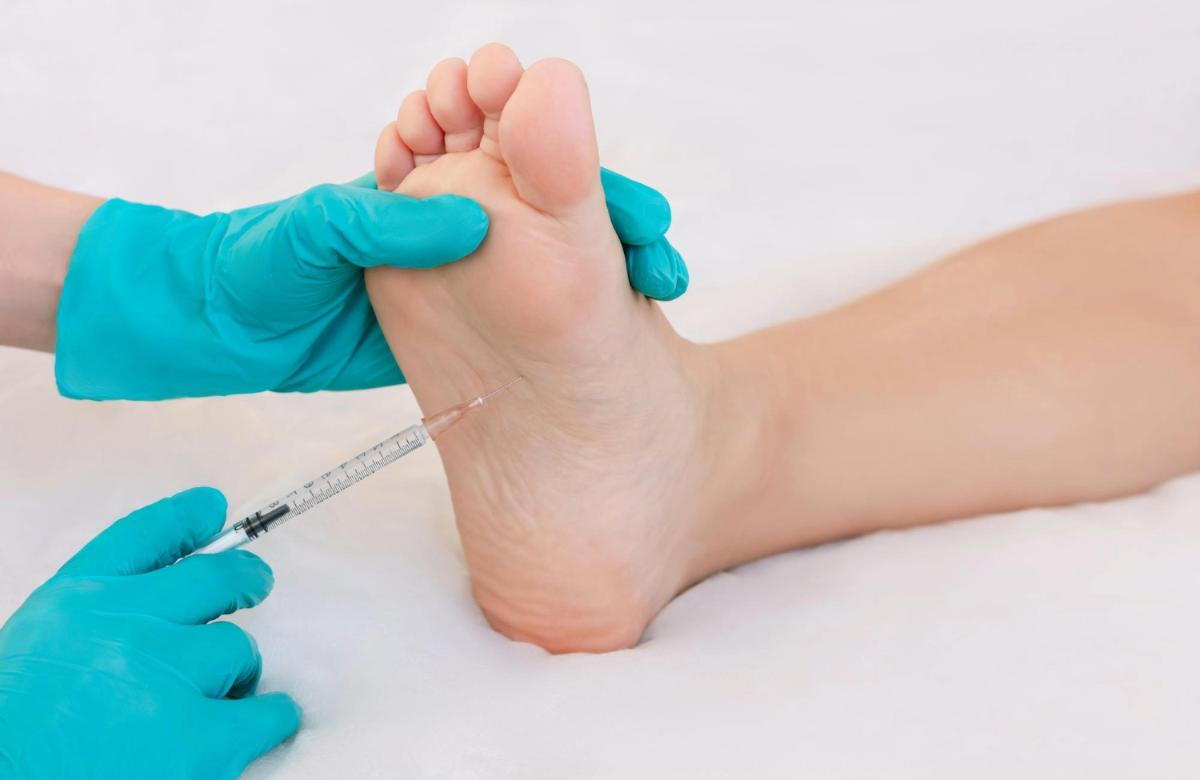
A cortisone injection is a quick, in-office procedure performed by your podiatrist.
Step-by-Step Overview:
Evaluation and Diagnosis
Your podiatrist confirms the diagnosis through physical examination and, if needed, imaging.Preparation
The injection site is cleaned thoroughly to reduce infection risk.Injection
The medication is injected precisely into the affected area. Some patients feel brief pressure or mild discomfort, but the procedure is generally well tolerated.Immediate Aftercare
You may be observed briefly and then allowed to resume normal activities with specific instructions.
The entire process usually takes only a few minutes.
Does a Cortisone Injection Hurt?
Most patients report minimal discomfort. The local anesthetic included in the injection often provides immediate numbness, which reduces pain during and shortly after the procedure.
Any soreness afterward is typically mild and temporary.
How Long Does a Cortisone Injection Take to Work?
Relief may occur in stages:
Immediate relief: From the anesthetic, lasting several hours
Temporary soreness: Known as a “cortisone flare,” may occur within 24–48 hours
Therapeutic relief: Begins within a few days as the steroid reduces inflammation
Patients often notice significant improvement within 3–7 days.
How Long Do Cortisone Injections Last?
The duration of relief varies based on:
The condition being treated
Severity of inflammation
Activity level
Underlying foot mechanics
In many cases, relief lasts:
Several weeks
Several months
Long enough to allow healing with supportive care
Some patients experience long-term improvement after a single injection, while others may require additional treatment.
How Often Can You Get Cortisone Injections?
Cortisone injections are not meant to be given frequently. Most podiatrists limit injections to:
No more than 2–3 per year in the same area
Overuse can weaken soft tissues or affect joint health. Your podiatrist will always balance benefits with safety.
Are Cortisone Injections Safe?
When administered appropriately, cortisone injections are considered safe and effective. Potential side effects are uncommon but may include:
Temporary pain or swelling
Skin discoloration at the injection site
Fat pad thinning (with repeated injections)
Serious complications are rare, especially when injections are performed by experienced podiatrists.
What Should You Do After a Cortisone Injection?
After your injection, your podiatrist may recommend:
Limiting high-impact activity for 24–48 hours
Continuing stretching or physical therapy
Wearing supportive footwear or orthotics
Applying ice if soreness occurs
Following post-injection instructions helps maximize results and prevent recurrence.
Cortisone Injections for Plantar Fasciitis
One of the most common uses of cortisone injections in podiatry is plantar fasciitis. Heel pain that is worse in the morning or after rest often responds well when inflammation is controlled.
Injections are typically used after conservative treatments have been attempted and can provide meaningful relief when pain is severe or persistent.
Are Cortisone Injections a Cure?
Cortisone injections treat inflammation, not the underlying cause. For best results, they should be combined with:
Proper footwear
Custom orthotics
Stretching and strengthening
Activity modification
Addressing biomechanics helps prevent pain from returning once the injection wears off.
When Should You Consider Seeing a Podiatrist?
You should schedule an evaluation if:
Foot or heel pain persists longer than two weeks
Pain is affecting your ability to walk or work
Home treatments are no longer effective
You are considering an injection and want expert guidance
Early evaluation often prevents chronic pain and more invasive treatment.
Expert Foot Pain Treatment in Tampa Bay
At Total Foot & Ankle of Tampa Bay, our experienced podiatrists provide comprehensive, personalized care for foot and ankle pain. Cortisone injections are offered when appropriate and always as part of a thoughtful, patient-centered treatment plan.
We proudly serve patients in Brandon, Riverview, Sun City Center, Wesley Chapel, and Zephyrhills, helping them return to comfortable, active lives.
Schedule Your Appointment Today
If foot or heel pain is limiting your daily activities, professional treatment can help.
👉 Call Now: (813) 788-3600
👉 Book Your Appointment Online:
https://www.totalfootandankleoftampabay.com/request-appointment
Relief from foot pain starts with the right care—schedule your visit today.
- posted: Jan. 14, 2026
Foot pain can interfere with nearly every aspect of daily life—from walking and working to exercising and sleeping. When conservative treatments such as rest, stretching, orthotics, or anti-inflammatory medications do not provide enough relief, cortisone injections may be recommended as an effective next step.
Cortisone injections are commonly used in podiatry to reduce inflammation and relieve pain caused by a variety of foot and ankle conditions. Understanding how these injections work, what the procedure involves, and how long relief typically lasts can help you decide whether this treatment is right for you.
What Is a Cortisone Injection?
A cortisone injection contains a corticosteroid medication, often combined with a local anesthetic. Corticosteroids are powerful anti-inflammatory agents that reduce swelling, irritation, and pain at the source.
Unlike oral medications that affect the entire body, cortisone injections are delivered directly into the area of inflammation, providing targeted relief with minimal systemic effects.
Common Foot and Ankle Conditions Treated with Cortisone Injections
Cortisone injections are frequently used to treat inflammatory conditions, including:
Plantar fasciitis
Heel pain and heel spurs
Tendonitis (Achilles, posterior tibial, peroneal)
Arthritis in the foot or ankle joints
Capsulitis
Bursitis
Nerve irritation
Your podiatrist will determine whether inflammation is the primary cause of your pain before recommending an injection.
When Are Cortisone Injections Recommended?
Cortisone injections are typically considered when:
Pain has persisted for weeks or months
Conservative treatments have failed
Inflammation is limiting mobility or daily activities
Surgery is not indicated or should be delayed
They are often used as part of a comprehensive treatment plan, not as a standalone solution.
What Happens During a Cortisone Injection Appointment?
A cortisone injection is a quick, in-office procedure performed by your podiatrist.
Step-by-Step Overview:
Evaluation and Diagnosis
Your podiatrist confirms the diagnosis through physical examination and, if needed, imaging.Preparation
The injection site is cleaned thoroughly to reduce infection risk.Injection
The medication is injected precisely into the affected area. Some patients feel brief pressure or mild discomfort, but the procedure is generally well tolerated.Immediate Aftercare
You may be observed briefly and then allowed to resume normal activities with specific instructions.
The entire process usually takes only a few minutes.
Does a Cortisone Injection Hurt?
Most patients report minimal discomfort. The local anesthetic included in the injection often provides immediate numbness, which reduces pain during and shortly after the procedure.
Any soreness afterward is typically mild and temporary.
How Long Does a Cortisone Injection Take to Work?
Relief may occur in stages:
Immediate relief: From the anesthetic, lasting several hours
Temporary soreness: Known as a “cortisone flare,” may occur within 24–48 hours
Therapeutic relief: Begins within a few days as the steroid reduces inflammation
Patients often notice significant improvement within 3–7 days.
How Long Do Cortisone Injections Last?
The duration of relief varies based on:
The condition being treated
Severity of inflammation
Activity level
Underlying foot mechanics
In many cases, relief lasts:
Several weeks
Several months
Long enough to allow healing with supportive care
Some patients experience long-term improvement after a single injection, while others may require additional treatment.
How Often Can You Get Cortisone Injections?
Cortisone injections are not meant to be given frequently. Most podiatrists limit injections to:
No more than 2–3 per year in the same area
Overuse can weaken soft tissues or affect joint health. Your podiatrist will always balance benefits with safety.
Are Cortisone Injections Safe?
When administered appropriately, cortisone injections are considered safe and effective. Potential side effects are uncommon but may include:
Temporary pain or swelling
Skin discoloration at the injection site
Fat pad thinning (with repeated injections)
Serious complications are rare, especially when injections are performed by experienced podiatrists.
What Should You Do After a Cortisone Injection?
After your injection, your podiatrist may recommend:
Limiting high-impact activity for 24–48 hours
Continuing stretching or physical therapy
Wearing supportive footwear or orthotics
Applying ice if soreness occurs
Following post-injection instructions helps maximize results and prevent recurrence.
Cortisone Injections for Plantar Fasciitis
One of the most common uses of cortisone injections in podiatry is plantar fasciitis. Heel pain that is worse in the morning or after rest often responds well when inflammation is controlled.
Injections are typically used after conservative treatments have been attempted and can provide meaningful relief when pain is severe or persistent.
Are Cortisone Injections a Cure?
Cortisone injections treat inflammation, not the underlying cause. For best results, they should be combined with:
Proper footwear
Custom orthotics
Stretching and strengthening
Activity modification
Addressing biomechanics helps prevent pain from returning once the injection wears off.
When Should You Consider Seeing a Podiatrist?
You should schedule an evaluation if:
Foot or heel pain persists longer than two weeks
Pain is affecting your ability to walk or work
Home treatments are no longer effective
You are considering an injection and want expert guidance
Early evaluation often prevents chronic pain and more invasive treatment.
Expert Foot Pain Treatment in Tampa Bay
At Total Foot & Ankle of Tampa Bay, our experienced podiatrists provide comprehensive, personalized care for foot and ankle pain. Cortisone injections are offered when appropriate and always as part of a thoughtful, patient-centered treatment plan.
We proudly serve patients in Brandon, Riverview, Sun City Center, Wesley Chapel, and Zephyrhills, helping them return to comfortable, active lives.
Schedule Your Appointment Today
If foot or heel pain is limiting your daily activities, professional treatment can help.
👉 Call Now: (813) 788-3600
👉 Book Your Appointment Online:
https://www.totalfootandankleoftampabay.com/request-appointment
Relief from foot pain starts with the right care—schedule your visit today.