
- posted: Mar. 18, 2026
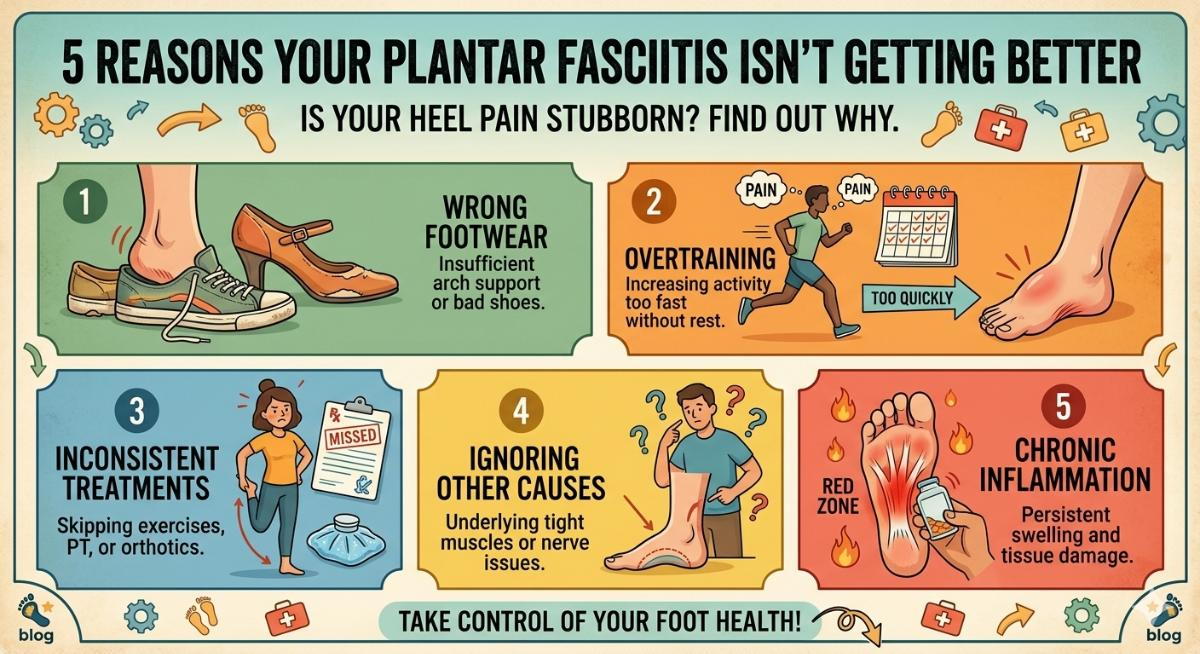
5 Reasons Your Plantar Fasciitis Isn’t Getting Better
(And What You Can Do to Finally Find Relief)
Plantar fasciitis is the most common cause of heel pain, affecting millions of people every year. It occurs when the plantar fascia—the thick band of tissue that supports the arch of your foot—becomes irritated or inflamed.
Most people expect plantar fasciitis to improve with rest, stretching, or better shoes. But many patients become frustrated when the pain lingers for weeks or even months despite trying common home treatments.
If your plantar fasciitis isn’t getting better, there may be underlying reasons preventing your foot from healing properly. Understanding these causes can help you take the right steps toward lasting relief.
Below are five of the most common reasons plantar fasciitis doesn’t improve—and what you can do about it.
1. You’re Still Putting Too Much Stress on Your Feet
One of the biggest reasons plantar fasciitis persists is continued strain on the plantar fascia.
The plantar fascia absorbs shock every time you take a step. Activities such as running, long walks, standing for extended periods, or sudden increases in exercise can prevent the ligament from healing.
Even everyday habits can contribute to ongoing strain, including:
Standing on hard floors for long periods
Walking barefoot on tile or hardwood
Increasing workout intensity too quickly
High-impact sports or running on pavement
When the plantar fascia is repeatedly stressed, the tiny tears in the tissue cannot fully heal.
What helps:
Reducing high-impact activity, wearing supportive shoes, and allowing time for proper recovery can significantly improve healing.
2. Your Shoes Aren’t Providing Enough Support
Footwear plays a major role in plantar fasciitis recovery. Many patients unknowingly continue wearing shoes that lack proper arch support or cushioning, which increases pressure on the heel.
Common footwear problems include:
Worn-out running shoes
Flat shoes with little arch support
Flip-flops or unsupportive sandals
Minimalist shoes without cushioning
In Florida’s warm climate, many people wear sandals or flip-flops regularly. Unfortunately, these types of shoes often provide very little support for the plantar fascia, allowing the ligament to remain strained.
What helps:
Supportive walking or running shoes, cushioned insoles, and custom orthotics can reduce stress on the plantar fascia and support proper foot alignment.
3. Tight Calf Muscles Are Pulling on the Plantar Fascia
Tight calf muscles are one of the most overlooked contributors to plantar fasciitis.
The calf muscles connect to the heel through the Achilles tendon. When the calves are tight, they place additional tension on the plantar fascia, increasing strain with every step.
This is why many people with plantar fasciitis experience:
Morning heel pain
Stiffness when first standing up
Increased pain after exercise
If the calf muscles remain tight, the plantar fascia continues to be pulled and irritated.
What helps:
Regular stretching of the calf muscles and Achilles tendon can relieve pressure on the plantar fascia and improve flexibility in the foot and ankle.
4. Your Foot Mechanics May Be Contributing to the Problem
Some people develop plantar fasciitis because of biomechanical issues in the way their feet move while walking or running.
Common structural factors include:
Flat feet (fallen arches)
High arches
Overpronation (foot rolling inward)
Uneven weight distribution while walking
When foot mechanics are not properly aligned, the plantar fascia absorbs excessive strain.
Without correcting these underlying issues, plantar fasciitis may continue returning—even after temporary relief.
What helps:
A podiatrist can evaluate your walking pattern and foot structure. Custom orthotics or specialized treatments may help improve alignment and reduce strain on the plantar fascia.
5. It Might Not Be Plantar Fasciitis at All
In some cases, persistent heel pain is caused by a different condition that mimics plantar fasciitis.
Several foot problems produce similar symptoms, including:
Heel stress fractures
Baxter’s nerve entrapment
Achilles tendinitis
Heel fat pad atrophy
Tarsal tunnel syndrome
If the pain does not improve with typical plantar fasciitis treatments, it may be a sign that another condition is responsible for the discomfort.
A proper evaluation is essential to determine the true cause of heel pain.
When to See a Podiatrist
While mild plantar fasciitis may improve with rest and stretching, persistent heel pain should not be ignored.
You should consider seeing a podiatrist if you experience:
Heel pain lasting longer than two to three weeks
Pain that worsens during walking or activity
Difficulty standing or walking comfortably
Swelling or tenderness around the heel
Pain that interferes with exercise or daily routines
Early diagnosis and treatment can help prevent chronic foot problems and allow the plantar fascia to heal properly.
Expert Plantar Fasciitis Treatment Across Tampa Bay
If your plantar fasciitis isn’t improving, professional evaluation can help identify the cause and guide the most effective treatment.
At Total Foot & Ankle of Tampa Bay, our podiatrists specialize in diagnosing and treating heel pain using advanced diagnostic tools and personalized care plans.
We proudly serve patients across Tampa Bay at five convenient locations:
Brandon
Riverview
Wesley Chapel
Zephyrhills
Sun City Center
Our team provides comprehensive treatment options designed to relieve heel pain and restore comfortable movement.
Don’t Let Heel Pain Become a Long-Term Problem
Plantar fasciitis can be frustrating, especially when symptoms linger longer than expected. But in many cases, the reason the condition isn’t improving is an underlying factor that has not yet been addressed.
With the right diagnosis, supportive footwear, and targeted treatment, most patients can find significant relief and return to their normal activities.
If your heel pain hasn’t improved, the specialists at Total Foot & Ankle of Tampa Bay can help identify the cause and guide you toward lasting recovery.
- posted: Mar. 18, 2026
5 Reasons Your Plantar Fasciitis Isn’t Getting Better
(And What You Can Do to Finally Find Relief)
Plantar fasciitis is the most common cause of heel pain, affecting millions of people every year. It occurs when the plantar fascia—the thick band of tissue that supports the arch of your foot—becomes irritated or inflamed.
Most people expect plantar fasciitis to improve with rest, stretching, or better shoes. But many patients become frustrated when the pain lingers for weeks or even months despite trying common home treatments.
If your plantar fasciitis isn’t getting better, there may be underlying reasons preventing your foot from healing properly. Understanding these causes can help you take the right steps toward lasting relief.
Below are five of the most common reasons plantar fasciitis doesn’t improve—and what you can do about it.
1. You’re Still Putting Too Much Stress on Your Feet
One of the biggest reasons plantar fasciitis persists is continued strain on the plantar fascia.
The plantar fascia absorbs shock every time you take a step. Activities such as running, long walks, standing for extended periods, or sudden increases in exercise can prevent the ligament from healing.
Even everyday habits can contribute to ongoing strain, including:
Standing on hard floors for long periods
Walking barefoot on tile or hardwood
Increasing workout intensity too quickly
High-impact sports or running on pavement
When the plantar fascia is repeatedly stressed, the tiny tears in the tissue cannot fully heal.
What helps:
Reducing high-impact activity, wearing supportive shoes, and allowing time for proper recovery can significantly improve healing.
2. Your Shoes Aren’t Providing Enough Support
Footwear plays a major role in plantar fasciitis recovery. Many patients unknowingly continue wearing shoes that lack proper arch support or cushioning, which increases pressure on the heel.
Common footwear problems include:
Worn-out running shoes
Flat shoes with little arch support
Flip-flops or unsupportive sandals
Minimalist shoes without cushioning
In Florida’s warm climate, many people wear sandals or flip-flops regularly. Unfortunately, these types of shoes often provide very little support for the plantar fascia, allowing the ligament to remain strained.
What helps:
Supportive walking or running shoes, cushioned insoles, and custom orthotics can reduce stress on the plantar fascia and support proper foot alignment.
3. Tight Calf Muscles Are Pulling on the Plantar Fascia
Tight calf muscles are one of the most overlooked contributors to plantar fasciitis.
The calf muscles connect to the heel through the Achilles tendon. When the calves are tight, they place additional tension on the plantar fascia, increasing strain with every step.
This is why many people with plantar fasciitis experience:
Morning heel pain
Stiffness when first standing up
Increased pain after exercise
If the calf muscles remain tight, the plantar fascia continues to be pulled and irritated.
What helps:
Regular stretching of the calf muscles and Achilles tendon can relieve pressure on the plantar fascia and improve flexibility in the foot and ankle.
4. Your Foot Mechanics May Be Contributing to the Problem
Some people develop plantar fasciitis because of biomechanical issues in the way their feet move while walking or running.
Common structural factors include:
Flat feet (fallen arches)
High arches
Overpronation (foot rolling inward)
Uneven weight distribution while walking
When foot mechanics are not properly aligned, the plantar fascia absorbs excessive strain.
Without correcting these underlying issues, plantar fasciitis may continue returning—even after temporary relief.
What helps:
A podiatrist can evaluate your walking pattern and foot structure. Custom orthotics or specialized treatments may help improve alignment and reduce strain on the plantar fascia.
5. It Might Not Be Plantar Fasciitis at All
In some cases, persistent heel pain is caused by a different condition that mimics plantar fasciitis.
Several foot problems produce similar symptoms, including:
Heel stress fractures
Baxter’s nerve entrapment
Achilles tendinitis
Heel fat pad atrophy
Tarsal tunnel syndrome
If the pain does not improve with typical plantar fasciitis treatments, it may be a sign that another condition is responsible for the discomfort.
A proper evaluation is essential to determine the true cause of heel pain.
When to See a Podiatrist
While mild plantar fasciitis may improve with rest and stretching, persistent heel pain should not be ignored.
You should consider seeing a podiatrist if you experience:
Heel pain lasting longer than two to three weeks
Pain that worsens during walking or activity
Difficulty standing or walking comfortably
Swelling or tenderness around the heel
Pain that interferes with exercise or daily routines
Early diagnosis and treatment can help prevent chronic foot problems and allow the plantar fascia to heal properly.
Expert Plantar Fasciitis Treatment Across Tampa Bay
If your plantar fasciitis isn’t improving, professional evaluation can help identify the cause and guide the most effective treatment.
At Total Foot & Ankle of Tampa Bay, our podiatrists specialize in diagnosing and treating heel pain using advanced diagnostic tools and personalized care plans.
We proudly serve patients across Tampa Bay at five convenient locations:
Brandon
Riverview
Wesley Chapel
Zephyrhills
Sun City Center
Our team provides comprehensive treatment options designed to relieve heel pain and restore comfortable movement.
Don’t Let Heel Pain Become a Long-Term Problem
Plantar fasciitis can be frustrating, especially when symptoms linger longer than expected. But in many cases, the reason the condition isn’t improving is an underlying factor that has not yet been addressed.
With the right diagnosis, supportive footwear, and targeted treatment, most patients can find significant relief and return to their normal activities.
If your heel pain hasn’t improved, the specialists at Total Foot & Ankle of Tampa Bay can help identify the cause and guide you toward lasting recovery.